Fig. 01 — Interactive activity, child’s view on tablet during a video call.
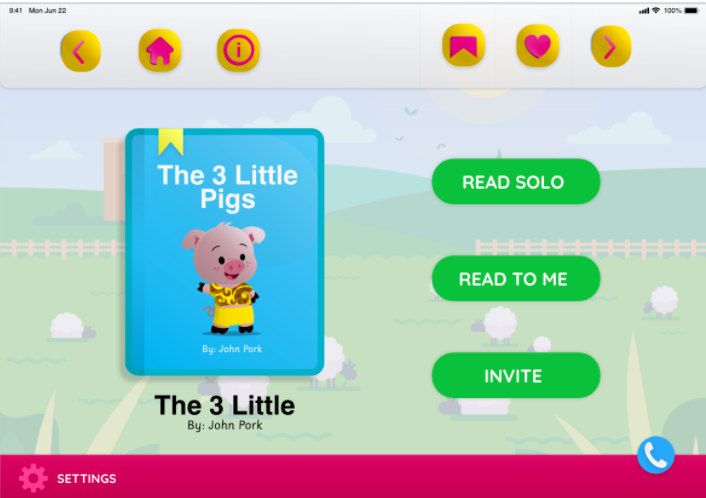
Fig. 02 — Reading interface, picture book with collaborative actions.
ActiveBooks are interactive stories where you can read, learn, and play at the same time — designed inside Together App, a video-chat product built specifically to connect long-distance grandparents with their grandkids.
The mission was simple to state and difficult to execute: help guide and facilitate the conversation between grandparents and grandkids through interactive books, so that families spend more time together and bond during video calls. The vision aimed higher — enhancing family bonds anchored in trust, collaboration, innovation, respect, and partnerships.
The purpose of the study was concrete: identify activities that strengthen the grandparent–grandchild bond for families with children ages 3–7.
Three market trends shaped the strategy.
Since the COVID-19 pandemic, the use of video-chat platforms has stayed elevated across age groups. The children’s e-publishing industry continues to grow year over year. And the grandparent population segment is expanding globally. The intersection of those three curves — video communication, digital reading for children, and an aging population invested in family connection — created a clear product space.
The business model offered three primary customer segments — parents, children, and grandparents — a digital interactive reading experience that helps them bond during a video chat by giving them a reason to stay connected longer. A secondary segment, publishers, was offered a platform to reach a focused audience. Content partnerships were planned with children’s publishers, independent writers, game publishers, and schools, with moderation before publication.
Fig. 01 — Interactive activity, child’s view on tablet during a video call.
Fig. 02 — Reading interface, picture book with collaborative actions.
Research surfaced a set of recurring pain points across surveys and live usability sessions.
The visual design of the existing app didn’t communicate clearly to its two primary users — grandparents and children. After testing with non-current users, it became evident that the sections needed to be recategorized and the information architecture refreshed entirely. Competitive analysis confirmed it: other apps in the space offered more content variety, more age-based categorization, and more frequent updates — all of which users explicitly wanted.
The hardest finding was retention. Users weren’t coming back, and the calls themselves were short — children rarely stayed engaged with grandparents for more than five minutes. Grandparents needed a facilitator: someone, or something, to bridge the conversation. Parents often played that role today. The product opportunity was to replace the parent with the content itself.
The single most important finding from prototyping was an interaction mismatch.
In the low-fidelity prototype, users were expected to click elements on the page. Their natural movement, observed consistently, was drag-and-drop. The behavior repeated in mid-fidelity testing. Rather than fight the instinct, the design adapted — the instructions on screen became explicit, telling users to “CLICK” on the items they needed to interact with.
The call button needed to be more prominent. The puzzle activity instructions needed rework. Users understood the purpose of the application, found it simple and easy to use, and liked the idea of interactive books — the foundations were validated, the details needed iteration.
The call button moved to the top, where users had been searching for it. Every activity instruction was rewritten to explicitly say “CLICK” to short-circuit the drag-and-drop attempt. Onboarding became part of the activity itself rather than a separate tutorial.
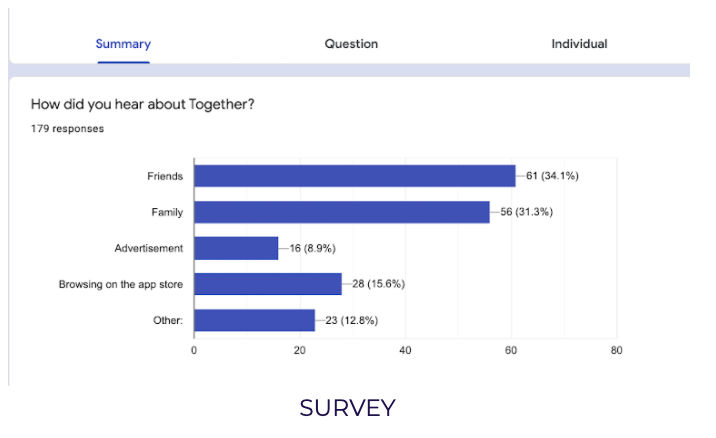
Fig. 03 — Hi-fi prototype, “The Three Little Pigs” interactive build scene.
After the research and prototyping phases, the strategy narrowed to three priority challenges and a concrete solution for each.
Returning users
The product needed a reason for users to come back beyond the video call itself. Solution: extend the experience outside the app — exportable activities (printable coloring pages, memory tags) that families can finish offline and share back to social channels, bringing them to the app again with new content from previous calls.
Creation of new content
Users needed a new way to consume ebooks — not as passive reading but as a shared experience. Solution: reframe classic stories so the users themselves become characters. In The Three Little Pigs, families color the pigs together before the story begins, and those pigs appear in the narrative throughout. The story arc was rewritten so the wolf becomes a friend — the users help the pigs build houses, prepare food, and play together.
Current content discovery
Usability tests showed users spent over a minute choosing a book to read for a 5-year-old — an unacceptable cost on paid calling time. Solution: reorganize the books section by age level, the first mental filter users apply when selecting a book. Success metric: time-to-select drops below 30 seconds.
ActiveBooks was designed to be promoted and validated through a landing page where families can try a live demo before committing.
The go-to-market plan followed the audience: Facebook and YouTube as primary acquisition channels, with the App Store and Google Play as conversion destinations supported by App Store Optimization techniques — keyword-rich titles, demo video, ranking visibility, testimonials, download volume. Email was the dedicated channel to onboard publishers as content partners.
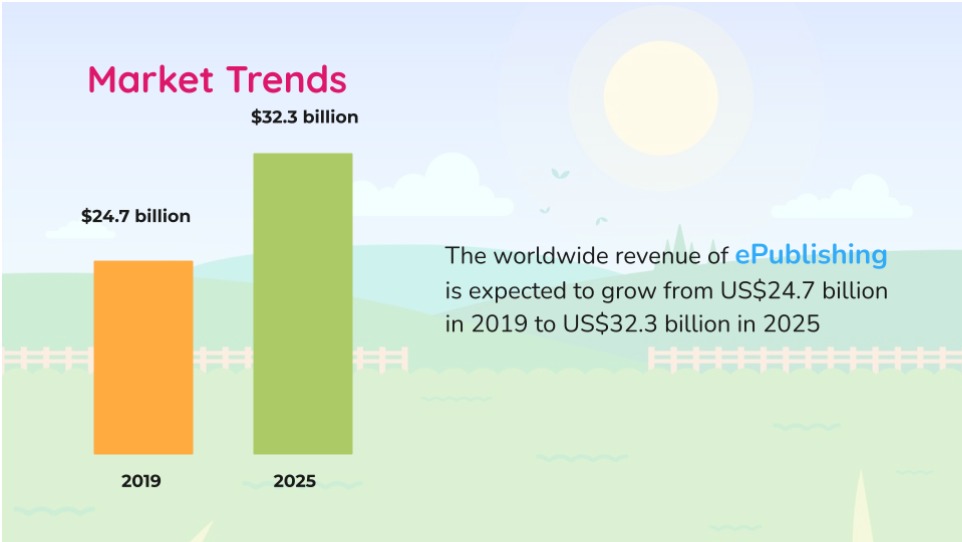
Fig. 04 — App structure, age-based content categorization.
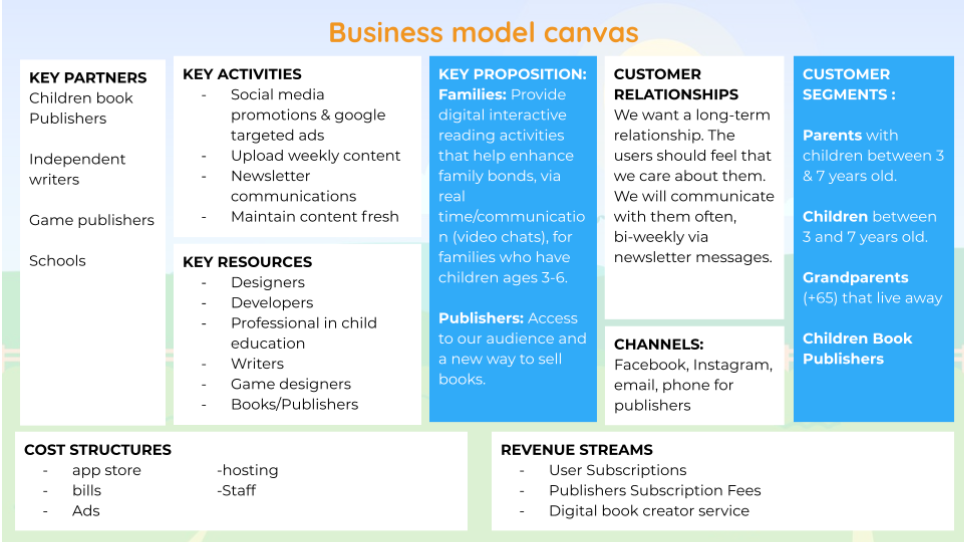
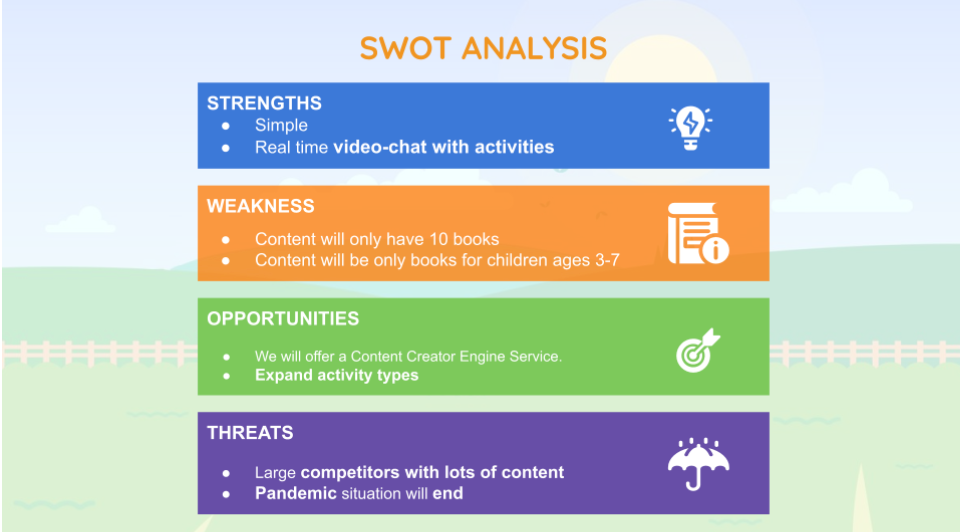
Fig. 05 — Business Model Canvas and SWOT analysis.
“We didn’t need a better video chat. We needed a reason for both sides to stay on the call.”
The product vision extended well past launch.
In the initial year, ActiveBooks would offer its interactive books through the website. Years 2–4 would expand into games, drawing activities, and a creator engine that lets third parties publish their own interactive stories inside the platform. Years 5–10 would pivot toward education by partnering with primary schools. The far horizon (years 10–20) positioned ActiveBooks content as a supplement to academic curriculums — turning a family-bonding product into an educational standard.